
- Translator
- Famous messages
Famous Morse code messages
Morse's 1844 telegram, Marconi's transatlantic S, the Titanic's distress calls, the BBC's V for Victory and Jeremiah Denton's blinked TORTURE are five famous Morse messages. Some sent words, while others made a single letter carry the message.
In short. Famous Morse messages include a sentence sent by telegraph, a single letter sent across the Atlantic, distress calls from the Titanic, the BBC's V for Victory and a prisoner's blinked report. Here are the words and signals, who sent them and what they meant.
What were the messages?
| Date | Sender | Message or signal |
|---|---|---|
| May 24, 1844 | Samuel Morse | “What hath God wrought.” (U.S. Capitol Visitor Center) |
| December 12, 1901 | Marconi's station at Poldhu | S (IEEE milestone) |
| April 15, 1912 | The Titanic's wireless operators | CQD and SOS (Harold Bride's report, 1912) (British inquiry report, 1912) |
| July 20, 1941 | BBC, Colonel Britton | V (National WWII Museum, 2024) |
| May 2, 1966 | Jeremiah A. Denton Jr. | TORTURE (DocsTeach) |
If you want a phrase to send yourself, start with HELLO in Morse code. For the distress signal, read SOS in Morse code.
Morse's Washington-to-Baltimore message in 1844
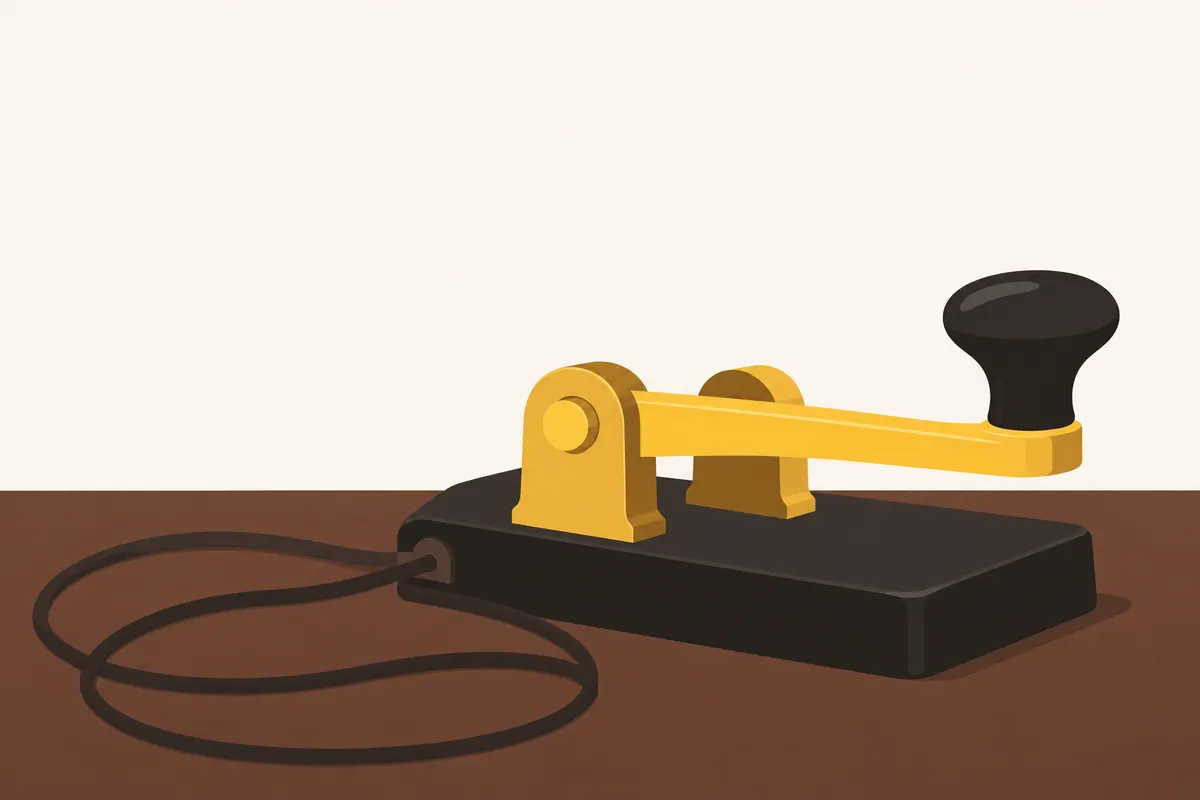
On May 24, 1844, Samuel Morse sent the words in the first row from the U.S. Capitol in Washington, D.C., to Baltimore, Maryland. Annie Ellsworth suggested the wording (U.S. Capitol Visitor Center).
What hath God wrought tells the story of the message and its surviving paper tape.
Marconi's transatlantic S in 1901

On December 12, 1901, Marconi's station at Poldhu in Cornwall, England, sent the letter S across the Atlantic. Guglielmo Marconi received it at Signal Hill in Newfoundland, using a wire antenna held up by a kite. The transmitting equipment was built by John Ambrose Fleming (IEEE milestone).
- S
Press Listen to hear the letter sent across the Atlantic.
The signal was arranged in advance. Marconi and his assistants George Kemp and Percy Paget had traveled to Newfoundland that December, where failed balloons and a lost kite complicated their work. They finally heard S, three short signals, through a telephone connected to a sensitive detector. The signal was too weak to print on tape, which made it harder to convince everyone that the experiment had succeeded (Oxford History of Science Museum).
The Titanic's CQD and SOS calls in 1912
Harold Bride told the U.S. Senate that Phillips sent the first distress call. He recalled CQD repeated about half a dozen times, followed by MGY repeated about half a dozen times. Bride explained that CQD was a recognized distress call and MGY identified the Titanic (U.S. Senate testimony, 1912).
- C
- Q
- D
- M
- G
- Y
Press Listen to hear the Titanic's CQD call.
In his later written report, Bride described Phillips calling both CQD and SOS (Harold Bride's report, 1912). The British inquiry's traffic table records an SOS call to the Olympic at approximately 12:45 a.m. ship's time. Its narrative also preserves the short request, “Come at once, we have struck a berg.” The Carpathia heard that request and answered that she was coming to help (British inquiry report, 1912).
For the sequence of calls and the ships that heard them, see The Titanic's Morse code messages.
The BBC's V for Victory in 1941
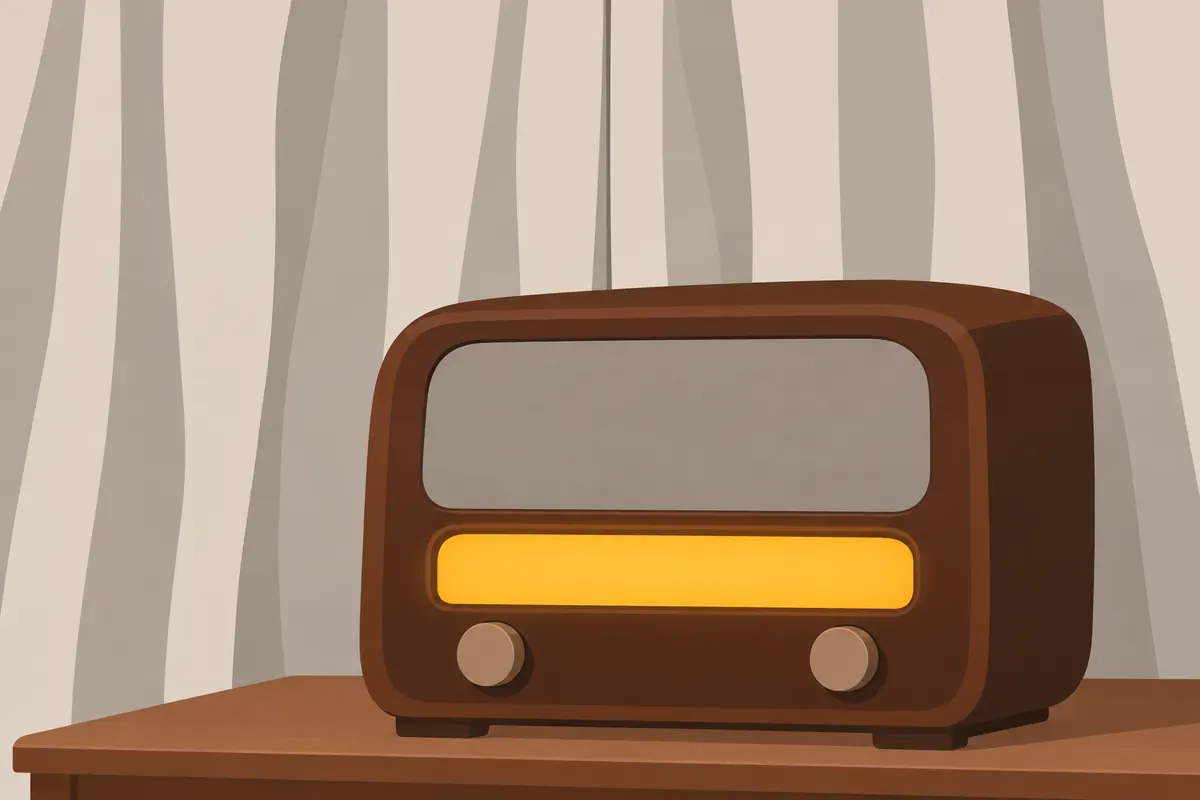
The BBC broadcaster Douglas Ritchie, known on air as Colonel Britton, called on listeners in occupied Europe to mobilize for the V for Victory campaign on July 20, 1941. He urged them to tap V in Morse, three dots and a dash, and use the rhythm for door knocks, horns, bugles and train whistles (National WWII Museum, 2024).
The idea had begun with the Belgian broadcaster Victor de Laveleye, who called for people to chalk and paint V signs in a January 14, 1941 broadcast. V connected victory in English, victoire in French and freedom in Flemish. The campaign's broadcasts opened with Beethoven's Fifth Symphony, whose opening rhythm echoed the Morse V (National WWII Museum, 2024).
Morse code in World War II covers wartime radio, listening and signal lamps.
Jeremiah Denton's blinked report in 1966
On May 2, 1966, North Vietnamese captors arranged a television interview with U.S. Navy Commander Jeremiah A. Denton Jr., conducted by a Japanese reporter. While answering questions on camera, Denton blinked the word TORTURE in Morse code (DocsTeach).
- T
- O
- R
- T
- U
- R
- E
U.S. Naval Intelligence later reviewed the videotape. DocsTeach describes Denton's report as the first clear confirmation received by U.S. intelligence that American prisoners of war were being tortured (DocsTeach).
For instructions on sending words with your eyes, see Blink Morse code with your eyes.
What about the French Navy's farewell?
A farewell attributed to the French Navy in 1997 is often quoted online. It is not listed here because we did not find it in a station log or an institutional record.
Explore a message in the translator
Open Morse's 1844 message in the Morse code translator. Compare its letters with the Morse code alphabet, then try following the sound with the text covered. Listen for the longer gaps between the words. Start with one word and replay it before moving to the next.
Open WHAT HATH GOD WROUGHT in the translatorFor a structured next step, use the guide to learning Morse code by ear.
Sources
- Make a Telegraph, When was the first telegraph sent?. U.S. Capitol Visitor Center, checked 9 November 2026.
- Milestones: Transmission of Transatlantic Radio Signals, 1901. IEEE, Engineering and Technology History Wiki, checked 9 November 2026.
- Wireless World: Marconi and the Making of Radio, Atlantic Crossing. History of Science Museum, University of Oxford, checked 9 November 2026.
- “Titanic” Disaster Hearings, day 2: testimony of Harold Bride and Guglielmo Marconi. US Senate, subcommittee of the Committee on Commerce; transcript by the Titanic Inquiry Project, April 1912.
- Harold Bride's report to the Marconi Company, read into the record of the “Titanic” Disaster Hearings, day 14. US Senate, subcommittee of the Committee on Commerce; transcript by the Titanic Inquiry Project, letter dated 27 April 1912.
- Report on the Loss of the Steamship “Titanic”, British Wreck Commissioner's Inquiry (reprinted as US Senate Document 933, 62nd Congress). Wreck Commissioner's Court; text transcribed by Project Gutenberg, report dated 30 July 1912.
- V for Victory: A Sign of Resistance, Jennifer Putnam. The National WWII Museum, 1 February 2024.
- U.S. Navy Commander Jeremiah A. Denton, Jr. (photograph, National Archives Identifier 849123, with description). National Archives, DocsTeach, checked 6 November 2026.